
 EN
EN
 AR
AR
 CS
CS
 DA
DA
 NL
NL
 FI
FI
 FR
FR
 DE
DE
 EL
EL
 IT
IT
 JA
JA
 KO
KO
 NO
NO
 PL
PL
 PT
PT
 RU
RU
 ES
ES
 SV
SV
 TL
TL
 ID
ID
 VI
VI
 TH
TH
 MS
MS
Is there any difference in color between brass sheets and pipes?
This involves materials science and visual perception. Essentially, there is no fundamental difference in the basic color of brass plates and pipes when their material composition is the same, as they are both made of the same brass alloy.
Jiayi Technology Co., Ltd. once encountered a situation where the surface color of brass differed greatly. Jiayi specialized on cnc maching ans sheet metal fabrication, who has the ability to provide customers with one-stop services, from assisting with design to assembling parts. Our client's product material is brass, which includes both pipes and plates. After processing, we found that the color difference between the plates and pipes was significant, especially after surface treatment, which further magnified the difference.
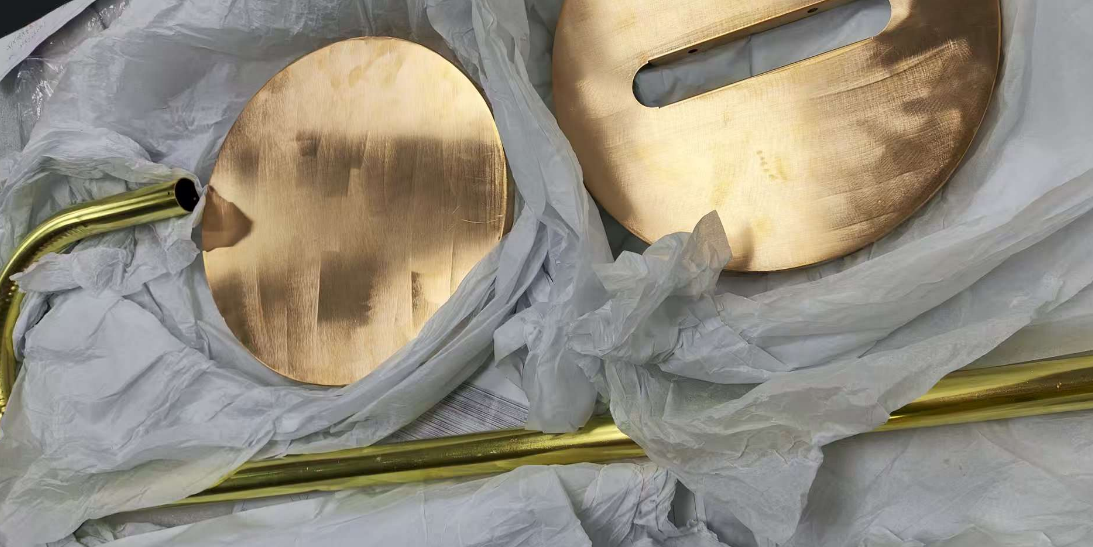
However, in practical observation and industrial applications, we often feel that there are differences in their colors. This difference mainly comes from the following aspects:
1. Main influencing factors (reasons for visual differences)
A. Surface processing status and smoothness
This is the most significant and direct cause of color visual differences.
Board: Usually supplied in the form of boards, strips, and rolls. The surface may exhibit:
Bright surface (such as mirror, glossy): After polishing or precision rolling, the surface is smooth like a mirror, with high reflectivity, and the color looks more vivid, shiny, and metallic, which can better reflect the natural color of brass (golden yellow).
Matte/matte finish (such as brushed or frosted): After being treated with brushed or sandblasted, the surface has fine textures. These textures diffuse light, making the colors appear softer, more stable, and textured. The golden tone appears less "jumping" and sometimes feels slightly darker or whiter.
Pipe material: usually supplied in the form of straight pipes or coils. The surface state depends on the production process (such as drawing, welding, and polishing).
Common drawn bright brass tubes: The inner and outer walls are very smooth, especially the outer wall, which may be close to the bright surface of the board, with a bright golden color.
Some welded or unpolished pipes may have slight oxidation or processing marks on the surface, and the color may not be as uniform and bright as the sheet metal.
B. Thickness and Perspective Effect
Board: It is a solid body, and what you see is the reflected light on its surface.
Pipe material: It is a hollow body. When you observe the cross-section of the pipe from the end face, light will pass through a certain thickness of material. Brass itself has translucency, and thicker brass will appear darker, richer, and even slightly orange in color on the end face, while thinner pipe walls will appear lighter in color on the end face. This is a difference caused by optical physics, not a difference in material color.
C. Minor fluctuations in production batches and composition
Even for the same grade (such as H62, H65), brass from different furnaces and manufacturers may have very small fluctuations in the copper zinc ratio or contain trace amounts of other elements (such as lead, iron, tin). These will all affect the final color tone, which may be slightly reddish (high copper content) or slightly lighter/whiter (high zinc content). This difference may occur randomly between the board and the pipe, and is not a regular difference.
D. Subsequent processing and degree of oxidation
Inventory status: The pipes may have poor local ventilation due to storage methods (such as tight bundling), resulting in slight color differences with the oxidation rate of the board.
Passivation treatment: In order to prevent oxidation discoloration, brass materials are often passivated (such as acid pickling passivation, coating). Minor differences in processing techniques can lead to the formation of oxidation/protective films with different thicknesses and compositions on the surface, thereby affecting the reflective properties and resulting in slightly different colors.
2. Core Conclusion
The material determines the background color, and the craftsmanship determines the appearance: the basic material color of the board and pipe is the same. The majority of the color differences you see come from their "surface state" (brightness, texture) and "observation method" (whether they look at the surface or the end face).
The premise of comparison: When comparing, it is necessary to ensure that the plates and pipes are of the same grade and in the same surface state (such as both in a bright annealed state), and observe their surfaces under the same lighting conditions, so that their colors are basically the same.
Common situation examples:
If you hold a shiny polished brass plate and compare it to a brass tube with a brushed surface, the plate will definitely look more golden and shiny.
If you look at the end face of a thick walled brass tube, it will appear darker in color than the surface of the same material sheet.
3. Selection and application suggestions
Pay attention to the grade: First, determine the brass grade you need (such as H65 and H68 for decoration, H59 and H62 for mechanical use), which determines the basic mechanical properties and color preference.
Clear surface requirements: Clearly explain to the supplier whether you need a "glossy surface," "brushed surface," "matte surface," or "natural color (untreated)," which is the key to controlling the final color and texture.
Request for samples: For projects with strict color requirements (such as decoration engineering), it is necessary to request physical samples of boards and pipes from the same batch for sample confirmation to ensure uniform visual effects.
In summary, there is no essential and inevitable difference in "color" between brass plates and pipes, but the "visual differences" brought about by processing and presentation methods are very common.
Recommended Products
Hot News
-
What is MIM processing method?
2025-11-25
-
Does copper for conductive purposes need surface treatment?
2025-11-21
-
Advantages of CNC machining
2024-01-16
-
What is CNC machining technology?
2024-01-16
-
The development trend of CNC machining
2024-01-16
-
Surface treatment technology in CNC machining: improving product added value
2025-03-20
-
What is the difference between SS316 and SS316L?
2025-11-10
-
Good news -100pcs large mechanical equipment casings have been produced
2025-11-11
-
Surface treatment of stainless steel - powder coating or spray painting
2025-11-13
-
What Role does Sheet Metal Shell Processing Play in Electronic Products?
2025-12-04